

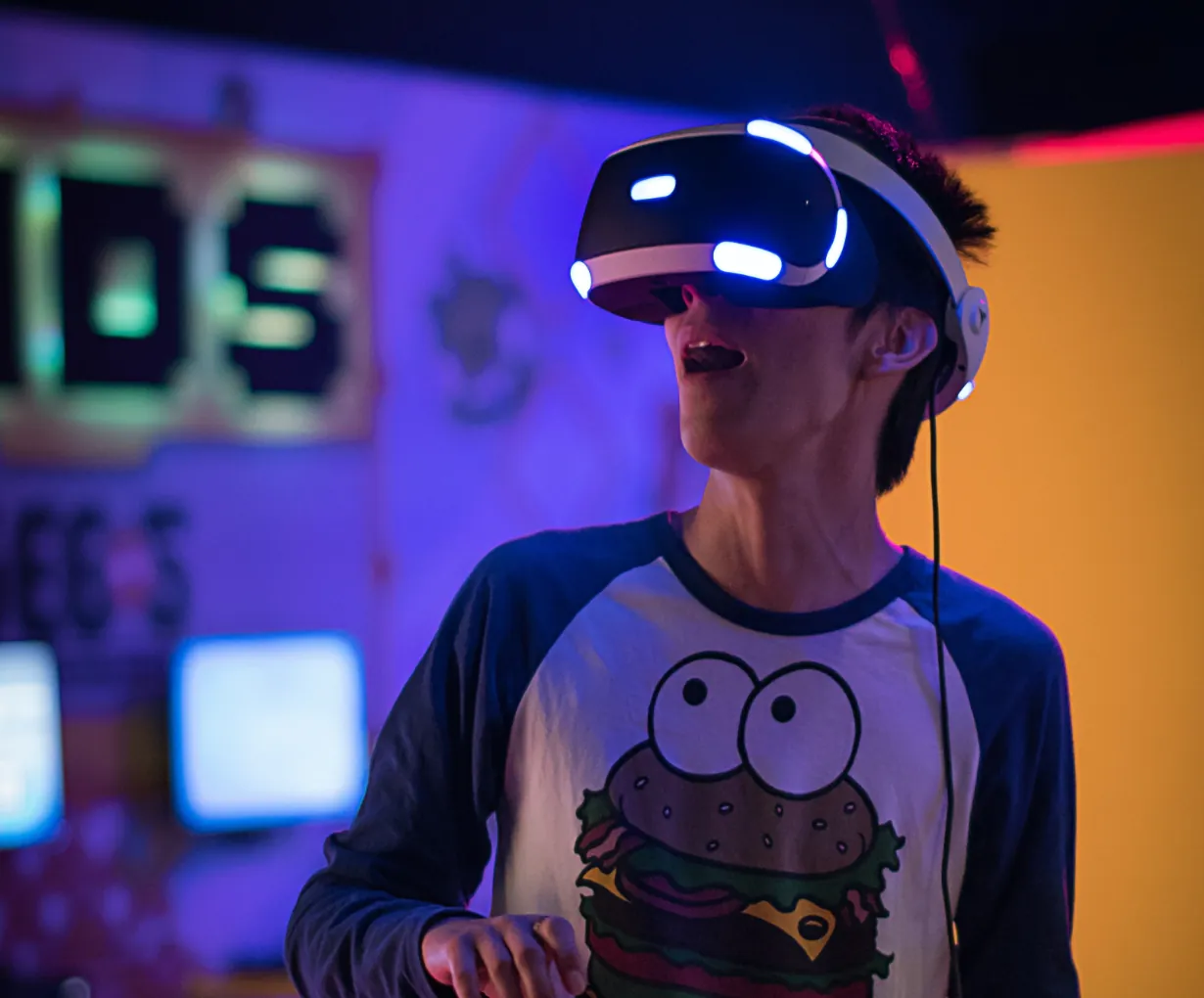
The College Algebra Crisis in Minority Communities
For many students pursuing STEM degrees, College Algebra is the first major academic hurdle—and for underrepresented minority students at Historically Black Colleges and Universities (HBCUs) and Hispanic-Serving Institutions (HSIs), the challenge is even greater. At Prairie View A&M University (PVAMU), an HBCU, failure rates in College Algebra reach 55%, effectively blocking countless students from entering STEM fields before they even begin.
Traditional teaching methods—lectures, textbooks, and rote memorization—often fail to engage students who struggle with abstract mathematical concepts. But what if there was a way to make algebra tangible, interactive, and even exciting?
Enter virtual reality (VR)—a technology that doesn’t just teach math but immerses students in it.
In this article, we’ll explore:
- Why College Algebra is such a persistent barrier for minority students in STEM
- How VR transforms learning by making math visual, interactive, and relevant
- Real-world case studies from Algeverse, our VR algebra program at PVAMU
- The future of VR in STEM education and how it can close equity gaps
The Problem with Traditional Algebra Instruction
The “Gatekeeper” Effect
College Algebra is a required course for most STEM majors, yet it has one of the highest failure rates in U.S. higher education. For Black and Hispanic students—who are already underrepresented in STEM—this creates a systemic barrier to degree completion.
Key Statistics:
- Only 40% of Black students and 47% of Hispanic students who start STEM majors complete their degrees (NSF, 2022).
- At HBCUs like PVAMU, algebra failure rates exceed 50%, forcing many students to switch majors or drop out.
Why Traditional Teaching Methods Fall Short
Most algebra courses rely on:
- Passive lectures where students watch, but don’t interact with, concepts
- Abstract problems with no real-world context (“Why am I solving for x?”)
- Limited personalized feedback, leaving struggling students behind
This approach disproportionately impacts minority students, many of whom:
- Come from underfunded K-12 systems with weaker math preparation
- Lack role models in STEM who can contextualize algebra’s importance
- Experience math anxiety due to repeated struggles with traditional teaching
The Need for a New Approach
If we want to increase STEM diversity, we must rethink how we teach algebra. Research shows that active, experiential learning dramatically improves outcomes—and VR is the perfect tool to deliver it.
How VR Transforms Algebra Learning
Learning by Doing: The Power of Immersion
VR doesn’t just show students math—it lets them manipulate it in 3D space.
Example: Instead of memorizing the quadratic formula, students:
- Enter a VR environment where they’re engineers designing a bridge.
- Adjust variables in real-time to see how changes affect stability.
- Receive instant feedback when their calculations are off.
This “learning by doing” approach leads to:
- 72% higher retention rates compared to lectures (Journal of Educational Psychology, 2021)
- Increased engagement, especially among students who typically disengage in traditional classes
Overcoming Math Anxiety Through VR
Many minority students enter algebra classes with deep-seated anxiety from past struggles. VR helps by:
- Removing the fear of failure (students can reset and try again without judgment)
- Gamifying learning with progress tracking and rewards
- Providing a safe space to experiment with concepts
Case Study: At PVAMU, students using Algeverse reported 40% lower anxiety levels after just 5 VR sessions.
Making Algebra Relevant to STEM Careers
A major issue with traditional algebra is that students don’t see its real-world applications. VR solves this by:
- Simulating STEM careers (e.g., coding, engineering, data science)
- Showing how equations apply to real problems (e.g., calculating trajectories for a space launch)
Student Quote:
“In VR, I finally understood why algebra matters. I wasn’t just solving for x—I was using it to build something.”
Algeverse in Action—Case Studies from PVAMU
The Algeverse Curriculum
Our VR program includes:
- 50+ hours of interactive algebra modules
- STEM career simulations (engineering, biotech, game design)
- Real-time progress analytics to personalize learning
Results from Pilot Testing
After one semester at PVAMU:
- Pass rates increased by 28% compared to non-VR classes
- 85% of students said VR made algebra “more enjoyable”
- Students spent 2x more time practicing outside class
Student Testimonials
“I used to hate math, but in VR, it felt like a game. I didn’t even realize I was learning.” — Jamal, Engineering Major
“For the first time, I saw myself as someone who could do STEM.” — Maria, Computer Science Major
The Future of VR in STEM Equity
Scaling Beyond HBCUs
Algeverse is designed to be adaptable for any institution, including:
- Hispanic-Serving Institutions (HSIs)
- Community colleges with high STEM dropout rates
- High schools preparing students for college math
Policy Implications
To close STEM equity gaps, policymakers should:
- Fund VR labs at minority-serving institutions
- Train professors in immersive teaching methods
- Support research on VR’s long-term impacts
A Call to Action
The future of STEM diversity depends on reimagining how we teach math. VR isn’t just a tool—it’s a bridge to opportunity for students who’ve been left behind by traditional methods.
Join us in making algebra accessible for all.
VR as the Ultimate Equalizer
College Algebra doesn’t have to be a barrier—it can be a gateway. By leveraging VR, we can:
- Engage students who’ve been left behind
- Make math relevant and exciting
- Open STEM careers to a more diverse generation
Algeverse is proving that the future of math education is immersive. The question is: Are we ready to embrace it?